

Yom Kippur: A Time for Reflection and Renewal Yom Kippur is on Saturday. I kind of forgot about it. It was not something my brain was spending energy on. I was reminded by my brother who called, asking to borrow a book. He’s not usually a reader and didn’t explain why. It took me some time to figure out that he might be very bored all day. Yom Kippur is also the first time I “broke” anything big. I slept in and went to shul to meet a friend. He lived alone, and suggested going back to his. I had brought my phone with me. We convinced ourselves that we were “allowed” to use our phones (and possibly smoke too). All it took was a short conversation between us involving some mental gymnastics, and our consciences were clear. I went back to yeshiva that winter and began to think less about breaking Shabbos. That was 12 years ago, and it’s been a long journey. Thinking “hey, you shouldn’t break Shabbos” came in ebbs and flows over the years. I fluctuated back and forth on the religious spectrum, never quite sure where to settle. I haven’t felt bad about treating Saturdays – and Yom Kippur in this case – like an extra weekday for quite a while now. Now, it’s a day for me to choose how to make the most of. Whether I use it for downtime, running errands, or spending time with loved ones, I see it as another day to make the most of. I’m going to the Taskmaster Live Experience on Saturday. I love the show, so I overpaid for tickets on launch day and have been looking forward to it since. I booked the tickets as fast as possible, picking a random Saturday that looked empty in my calendar without giving it a second thought. Turns out that Yom Kippur falls on this random Saturday too, so I must remember to stop by my parents on Friday to wish them an easy fast and that they may be sealed in the Book of Life. Written and submitted by GesherEU member, Sheya.

Pini on the Roof
Pini on the Roof GesherEU’s very own Pini Brown is the star of a brand new documentary short film, which will be shown at the UK Jewish Film Festival this November. ‘Pini on the Roof’ follows Yiddish Blues singer Pini, who left the Hasidic community in Stamford Hill five years ago and is now a mini-celebrity in the hipster neighbourhood next door. In this humorous and moving day-in-the-life portrait, he navigates belonging in the secular world while not rejecting where he came from. The film was a winner of the Dangoor UK Jewish Film Short Docs Fund this year, a project which aims to document modern-day British Jewish life in a series of creative and original four-minute documentaries. This premiered at the Finchley Phoenix in November 2024, with screenings in Manchester, Birmingham, Bath, Brighton, Glasgow, Leeds, Liverpool, and Oxford.

“I like having some level of ambiguity”
‘I like having some level of ambiguity’ Darren Kraushar, 30 is an intersex trans man, who works as a mathematics lecturer at the University of Utah. He shares his experience of growing up in the Charedi community in Hendon, North London, and how his life has changed since he left. “As a child, I always figured that they’d misidentified my sex at birth. I was born with a genetic mutation that’s generally referred to as NR51A, which causes a range of different disorders in sex development (DSD). I think I was initially misdiagnosed with partial androgen sensitivity, and assigned female, when actually I had partial gonadal dysgenesis (abnormally developed testicles). That meant my birth certificate said ‘female’ and I was brought up as a girl – when I felt I was a boy. My name was Naomi. In the Charedi community, boys and girls are brought up completely separately – they’re more or less a different species. As a child, I didn’t have boy playmates, but I wished I had, and whenever I got a chance to hang out with boys, I did. Sometimes I got in trouble for crossing the invisible line. I didn’t know exactly what it meant to be a boy, but I knew that ‘boys don’t cry’, so I tried not to cry. In some ways, you get a better deal in life in the community if you’re raised female – I had a better education and I wasn’t made to focus all my energy on studying the Talmud. I was able to take a bunch of GCSEs and then A levels, which I wouldn’t have been able to do as a boy. But on the other hand, I felt offended by that because I was aware I was only allowed to do those things because everyone thought I was a girl. The community doesn’t believe it’s worth imposing so many restrictions on girls because they’re not obligated to study Torah. My feelings about it all were complicated, and nobody was ever willing to help me process them. The only thing that mattered to my loved ones was the fact they knew I couldn’t have children. They worried about whether I’d be able to get married or participate in traditional, heteronormative intercourse. To be honest, I’d have been difficult to marry off anyway, because I was headstrong and intelligent and didn’t automatically respect men just because they studied a bunch of Talmud. I always got on better with people who were significantly less religious than my parents, people who had slightly more worldly knowledge. ‘Very few people in the community would be willing to go into a marriage with someone who is infertile, unless they’d already had children’ At about 18 or 19 I did have an awkward exchange with a very nice and understanding matchmaker. But it wasn’t until a few months ago, when I was 30, and had long left the community, that I finally heard back from him with an actual match! It amuses me to think it took over 10 years for him to find me someone. Very few people in the community would be willing to go into a marriage with someone who is infertile, unless they’d already had children. At 14, I started going through male puberty. That’s when other people became aware that something was up with Naomi – especially my parents. I wasn’t able to talk to them, or anyone, about this. Despite presenting as female, I had normal male hormones. It meant my voice broke and I started developing facial hair, while everybody else around me at my girls’ school was talking about getting their period and wearing their first bras. I felt like an alien. Small children would stare and point out my moustache, and classmates asked me if I was growing a beard. I think adults assumed I had a hormone problem like PCOS. I sometimes wondered this myself. My feelings were ambivalent. On the one hand, I didn’t have an issue with my body on a personal level, but on the other, on a societal level, it was causing me a lot of difficulty in life. I busied myself shaving my legs and shaving my face, trying to fit in better. My medical nightmare Although I didn’t want to go, my mother dragged me to the GP because I wasn’t growing breasts or starting my periods. The GP’s attitude was, ‘Some people go through puberty slower.’ I’m not sure how they he explained away the broken voice. Eventually, my mother bullied the GP into getting me a referral to the Royal Free Hospital. That was bad – the beginning of my medical nightmare. Thanks to the fierce, almost obsessive modesty in that community, being repeatedly stripped and examined by strangers was really unfamiliar and traumatic to me. Worse, I had this constant feeling of ‘they’re trying to figure out what kind of freak I am’. My parents made it worse by imposing their Charedi cultural sensitivities onto the doctors. They weren’t allowed to be blunt and frank and talk about what normal male or female reproductive systems looked like to me. My parents thought I wouldn’t know what a penis looked like, or what a prostate was. So, all I really got out of it was the fear that, once they’d discovered what kind of freak I was, then they were going to cut me up so that I was less of a freak. That’s pretty much exactly what happened. After being shunted from clinic to clinic, I ended up at UCLH, where everyone with a DSD ends up. I felt helpless and threw a tantrum when they tried to do a blood test. The doctors thought I had a needle phobia and got a psychologist to talk to me, but the needle wasn’t the problem – it was what I feared they’d do to me when they got the test results. So I took a needle from the supply and pricked my

An Unorthodox Approach to Parenting
An Unorthodox Approach to Parenting GesherEU has a new parenting group. We spoke to three members to find out how it helps them. When Jamie* was granted access to see his children for the first time in three years, he was excited to re-establish contact, but had no idea how he would interact with them, after so long apart. “My five-year-old boy isn’t growing up with me,” he explains. “He’s still in the Charedi community, which I have left. I felt clueless about what boys his age in the community like to play, or what gifts to take my children, and I didn’t want to get it wrong.” To find answers to his questions, he joined GesherEU’s new online parenting group, where he could ask other people who had shared similar experiences, and get peer support. “People recommended things to me,” he says. “I ended up buying some Lego, which I could build with my son, and this week I bought some stickers. Last week, we played Playmobile, and I’m hoping to do some art with him next time. It’s all trial and error. Talking to the other members of the group gave me a better understanding of what I needed to do, and the issues I might face.” “While parenting today is challenging for everyone, for our members, it can be be even more challenging.” Gesher EU founder, Emily Green, says she set up the parenting group because, “while parenting today is challenging for everyone, for our members it can be even more challenging.” She was inspired by Chavie Weisberger, who runs a parenting group at GesherEU’s American sister organisation, Footsteps. “Our members face particular issues which those not from the Charedi community don’t experience,” she explains. “For example, for many members, the other parent still lives in the ultra-orthodox community and they get a lot of support – financial and legal – from that community, when the person who’s left has no resources, money or contacts. It’s always difficult to be a single parent, but even more so when the other parent still in the community tries to alienate the children and does everything possible to undermine you. Members are often involved in lengthy, high-conflict court cases, adding extra stress. “The parenting group provides a safe space to discuss the issues and experiences of raising children in this unique situation. Supported by our welfare officer and a volunteer, members are able to provide peer support and advice to help others navigate this journey.” Following a long court battle, Jamie now only sees this children every two weeks for an hour in acontact centre, with a supervisor present – though he hopes that will change soon. “I’m so happy to see them, and they always look really happy to see me too, but it’s stressful for me and stressful for them, being in a small room, with someone else there taking notes. I also have to pay £90 to the contact centre, every time I see them. But our relationship is growing and getting better and better.” Like many men who’ve left the community, Jamie says the knowledge that leaving meant he’d have to leave his children behind made his decision that much more difficult. “Leaving them was very hard,” he says. “Your kids need you.” After he applied for custody rights, he says false allegations were made about him to the police. “The community wanted to prevent me from seeing my kids. Fortunately, the police didn’t take the allegations seriously. But dealing with them was horrible because I didn’t speak English properly, didn’t know about technology, didn’t know anything. I had to deal with stuff that was far bigger than me.” “When you come from a closeted community, it’s hard to be open.” Volunteer Lisa Hiteshi, who facilitates the fortnightly parenting group evening Zoom sessions, says the meetings are informal. “The group is in its infancy. It can be very busy at times, but there are also times when people are shy and don’t know what to say. When you come from a closeted community, it’s hard to be open. We’re a social support group – more than just a parenting group because we don’t just discuss dealing with the children, but all the issues surrounding it. The child of a GesherEU member may still be being brought up in a very religious home, and going to a religious school. while the parent outside is no longer religious. The mother might say, you can’t eat at your father’s house because it’s not kosher. It’s not easy, and the kids get really confused.” Schlomi* left the community five years ago, after his marriage ended due to religious differences: “My wife was very religious, while I questioned everything and ultimately stopped practising,” he explains. By that time, they already had a daughter, now aged seven. “We were living in Belgium, and four months after leaving I decided to move back to London. It’s meant I’ve had to make a big effort to see my daughter regularly. I travel there every few weeks and spend the weekend with her. “I have no regrets, but it’s made life very hard financially – especially during the Covid years when I was having to pay for expensive Covid tests every time I travelled. I’m grateful to GesherEU for giving me a loan to help with these costs.” GesherEU also helped Schlomi to draw up an agreement with his ex wife regarding visitation rights and weekly Zoom calls with his daughter, which both have stuck to: “I’m lucky that my ex is reasonable, but her still being in the community does make things tricky,” he says. “For instance, she would never invite me to have dinner together with her and our daughter, or let me stay in the spare room – something that might happen in the non-religious world. “When I visit, I have to stay in a hotel in the same road where she lives, and we are invited to a family in

Learning Times Tables at 23
Learning Times Tables at 23 When people come to GesherEU, they often have very little secular education. We find out how the charity and its partners help members to achieve their potential. Most children in the UK learn their times tables when they are seven. But GesherEU member Pini, now 23, has only just learned them. That’s because, like many boys in the Charedi community, he left school at 14 without even basic maths skills. Pini grew up in Stamford Hill after moving to the UK from Israel with his family when he was eight. He says it took more than two years to be given a place at a school, during which time he he received no education at all: “None of the schools wanted to accept us because we weren’t part of the community,” he recalls. “I only had basic education at that point. English was my first language, and I spoke some Hebrew, but I didn’t speak any Yiddish. When I finally went to school, all the lessons were in Yiddish so I had no idea what they were saying.” Helping people who have left the Charedi community to access the education they’ve missed out on is one of GesherEU’s main priorities. “Our members leave their communities without the education and life skills to make their way in the outside world,” says trustee, Robert Bernard. While primary independent Charedi boys’ schools are registered and undergo Ofsted inspections, they do very little secular teaching – just one or two hours a day, usually at the end of a 12-hour day. Most teaching is in Yiddish, there’s negligible physical education, no PSE (parents are asked or told to opt out) and most teachers are unqualified. At 13, boys go to a Yeshiva where they learn only the Talmud. They get no more secular education at all and don’t do GCSEs. If asked why they’re not in school, parents will claim to be home-educating their boys. “Since the Yeshivot only teach religious subjects, they claim that they are religious establishments, not schools, so that Ofsed, DfE and local education officials do not have authority to enter for either education or safeguarding reasons,” explains Robert. Girls receive slightly more education, with teaching in English, but no visual media or access to the internet. At secondary school level, girls can take GCSEs in a limited range of acceptable subjects, but books will be censored. From 16, many girls attend Sems (seminaries) where they learn to run kosher homes. They may be able to take ‘A’ levels in a limited number of subjects. When he started school, Pini wasn’t even able to read a clock When he started school, Pini wasn’t even able to read a clock. “One teacher – the nicest one – sat me down after school and taught me how to tell the time and other basic English and maths. I learned more the year he was there than in the rest of the years put together. “Most of the time, I used to get kicked out of class because I wasn’t up to speed with everyone else. They didn’t offer me help to catch up, and my family wasn’t willing to pay for extra tuition. Not that the teachers taught anyone much anyway – except when the inspectors came in.” Charedi schools don’t just offer substandard education, they also endorse corporal punishment, helping to keep children in a climate of fear – scared of what God will do to them if they step out of line, scared of their teachers, of their parents and of being ostracised by the community. “Once, a teacher hit me with my own book across my face. It happened a few times, because I was frustrating him, because I didn’t understand. But my brothers, who went to different schools, had it much worse than me. One got kicked out for misbehaving and ended up on the street.” Robert says the main function of education within the Charedi community is to produce obedient citizens – boys who will ideally spend their lives studying religious texts and girls who will be good Jewish wives and mothers: “They learn that to be of value, they must be perfect in obeying every nuance of Jewish law and their sect’s traditions. They learn that to be respected and honoured members of the family and community they will look forward to an arranged marriage before the age of 20, becoming parents who will produce many children.” Children are taught not to question anything, and to accept religious texts as the literal truth Children are taught not to question anything, and to accept religious texts as the literal truth. Sex education is banned: “Without the skills to survive outside the community they are totally dependent on the community’s support, that would be withdrawn should they not comply with its norms.” Pini finished Yeshiva with only basic literacy skills and no qualifications. Soon after, aged 19, frustrated and disheartened, he decided to leave the Charedi community. He bought himself a motorbike and started making deliveries of keys and money to support himself – the only work he could get. Following an accident, he got a job in a restaurant. Since then he has had a series of other menial jobs. “I’ve been held back because of my lack of education,” he says. “I don’t know what people do in offices. I don’t even know what skills other people have that I’m missing.” Pini was lucky. Somebody he knew told him about GesherEU, who put him in touch with Gateways, a Jewish alternative education provision. It was set up to support young people who can’t function in or access mainstream education, due to mental health, social or emotional challenges. Launched in 2014 under the umbrella of the London Jewish Cultural Centre, it merged with JW3 in 2015, and became an independent charitable organisation in September, 2023. Now based in Hendon, Gateways has had substantial funding from the Ronson and Wohl foundations. It

How I Escaped from a Golden Prison
How I Escaped from a Golden Prison Moishy* name changed* is 28. He left the Hasidic community three years ago. “Growing up in Stamford Hill, I used to see non-Jews walking through, in their jeans and t-shirts, or riding on their bicycles by the River Lea. For me, they represented something grounded and real – something I was very attracted to. My life was all about being ‘elevated’, being a devoted servant of God by studying the Torah. I craved something else. But I don’t think I ever actively thought, ‘I want to leave,’ and I didn’t know a single person who’d left the community. There was just a general sense of dissatisfaction, of not belonging and wanting more. I couldn’t articulate it because I was brought up not to think about my feelings – to disregard them – not to listen to my body or my instincts because that would lead to sin. I suppose I did have a sense of being part of something bigger – a team pride. To me, though, it was a golden prison. The Charedi world is very patriarchal, and as the eldest son, one of 10 siblings, there was pressure on me to be an outstanding scholar, which would give me status and the ability to marry a girl with an equally high status. Mum ran a small business from our cramped house and, like most of the men in the community, Dad studied all day. The school I went to was illegal – unregistered – and we did no secular studies at all. I wasn’t taught to read and write English; I taught myself a few words by learning the alphabet from shop signs, and the numbers one to 12 from a clock. A friend, who came from a slightly more liberal home, also helped me and, for a couple of months before I turned 13, I had some English lessons. The things I learned in those few hours made sense to me; I could relate to them, far more than to the 2000-year-old scriptures I was made to study at school. I never felt safe or nurtured. Everything was based on fear, the fear of hell if I thought the wrong thoughts or looked at somebody the wrong way. At school, we would be hit daily. The teacher would be reading and he’d randomly pick a child to ask, ‘What word am I at?’ If you were daydreaming and got it wrong, he would tell you to put your finger on the table and then he would hit you hard on your fingernail. It was incredibly painful, not to mention against the law. Although I didn’t choose to be born into the community, there is a certain stability to that life because you know you’ll never be homeless or alone – there are lots of organisations set up to provide everything. I suppose I did have a sense of being part of something bigger – a team pride. To me, though, it was a golden prison. There was no freedom whatsoever to feel, to explore, to be myself. I had no passions or ambitions because I wasn’t even allowed to get to the point of discovering them, let alone developing them. Sex education was non-existent. All we were told was: stay away from the opposite sex. Don’t look at girls in the street. Don’t think sexual thoughts. Ironically, the result was that we became hyper-sexualised – in constant conflict with ourselves, always feeling guilty, repressing thoughts we didn’t understand. I wasn’t allowed to speak to my female cousin, or my female next-door-neighbour and, from the age of 13, I had no contact whatsoever with anyone of the opposite sex. The night before their wedding, a bride and groom are separately given a one-hour sex education lesson, which instructs them in the mechanics of sex, and tells them what they can and can’t do. For example, the room has to be completely dark. Marriage isn’t about love or romance, it’s about fulfilling God’s commandment to have children. From 14, I gradually stopped believing in the Charedi way of life. I still believed in God and the Torah, but I began to reject the focus on status, on how the way you dress or behave indicates how devoted you are. I wanted to be normal and modern, even though I didn’t know what that entailed. My very first act of unconscious rebellion was to become a Zionist. My very first act of unconscious rebellion was to become a Zionist. The community is very anti-Zionist because it’s a secular idea – the idea of Jewish nationalism – not a religious one. At my school, my teacher actually told us that the Holocaust happened because of Zionists! For me, growing up in this very conservative place, nationalism made a lot of sense to me. I thought, why shouldn’t the Jews have a state? I admired Jews who stood up for themselves, who took their destiny in their own hands, because I couldn’t stand up for myself. But I couldn’t share this with anyone – it would be like a secular child admitting they felt sympathy with ISIS. I used to doodle the Star of David on my exercise book during lessons, then cross it out, because the symbol was seen as impure, sullied by its association with Zionism. I was married at 20, after I had studied at a Yeshiva in Israel for nine months. My parents and my wife’s parents arranged the marriage, and I met her on the actual night of our engagement party. I remember arriving, and seeing our cake on the table before I saw her. Six months later, our wedding took place. In the meantime, we were not allowed to communicate in any way. Unfortunately, I found my wife very unattractive, which was not a good start. Although I wasn’t being forced to marry, there was never any chance to back out. Everything was already organised, which put a
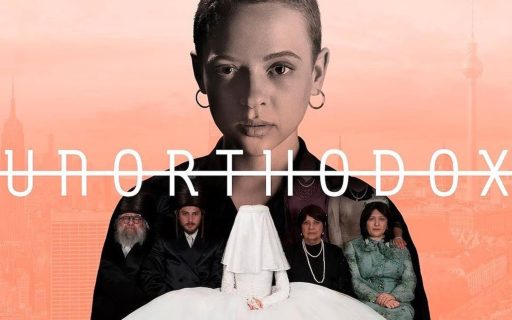
“It’s always worse than you realised” – Review of Unorthodox
“It’s always worse than you realised” – Review of Unorthodox My perspective is as a woman who grew up and lived in a similar Chasidic community for the first forty years of my life, who was driven out of the community for going against their rules, and whose relationship with my five children was destroyed as a result. I thought the Netflix series Unorthodox was very good. Although the Chasidic sect that I was a member of was slightly different, and so the nuances of my own experience are somewhat different, it was still all very, very familiar. The details of the story were greatly simplified, especially Esty’s experience of leaving, which sometimes jarred because it was less believable, yet I forgave this because the reality is so complex and goes so deep, that every bit of a story of the journey of living there, and leaving, can become too complex to manage in a single storyline. Simplifying it allowed the experience to emerge, and the plot to remain secondary, and this made it more powerful. The real strength of the series is that, without exaggerating or sensationalising anything, and without doing too much explaining, it shows the reality as it is, and thereby shows the abuse, denial of rights, and mental, physical and emotional violations that are part and parcel of life in the Chasidic community. ___ Esty is violated right from the very start of her life, when she is born to a mother who has been forced into marriage at a very young age, and who only has the right to have a relationship with her child is if she conforms to strict community rules. At a very deep level, Esty’s emotional safety is immediately compromised. Whilst this is the case for every single child born into this community, in Esty’s case it turns out that her mother is unable to conform. Esty is then torn away from her mother – a normal, intelligent, capable young woman who is very obviously well able to be a good-enough mother – for the only reason that her mother is not religious enough for her father’s family and his community. Most normal people would think it was a terrible thing to a child’s developing psyche to lose their relationship with a parent, and would consider people who do it deliberately to be evil, but nobody in Esty’s community thinks there is a problem. In Esty’s community, they think destroying the relationship with her mother is mandatory, and re-attachment to another figure is simple and necessary. They all believe it is better for Esty to be with someone who follows the rules, rather than her mother. Because Esty’s father is a drunken oaf he never remarries and lives with his parents (quite unsafe as a parent, but still a bona fide member of the community because he wears the garb and goes through the motions). Esty is brought up by her grandmother. She naturally seeks a primary attachment figure, and it is her grandmother, a woman who has colluded in and actively participated in alienating Esty from her mother, and who plants in Esty a false narrative that her mother has abandoned her, who takes that role. This is a conditional, unsafe attachment figure for Esty, but nobody around Esty worries about this. Esty has no alternative. Esty is further violated when everyone around her colludes to support the narrative that her mother has abandoned her for an irreligious life, rather than the truth that they were the cause of her losing her mother. Once this narrative is effectively stored in Esty, the people around her can rely on her to ensure any relationship with her mother is sabotaged. Esty’s mother continues to visit occasionally, but Esty naturally finds these visits difficult and uncomfortable. There are always other people present as chaperones. Esty doesn’t mind this. She feels better having the people she knows around her, believing they will keep her safe from her mother, who in her mind is the villain. Esty knows that she has to prove that she is different to her mother. Her grandmother makes it very clear to Esty that her only way of really pleasing her is by proving that she is not like her mother: by being a dedicated member of the community, getting married and have a large family of her own. Esty is very conscientious about doing this and is willing to do whatever it takes. None of this is explained to us. We discover it by seeing vignettes of Esty’s life in flashbacks as she navigates leaving the community, but through these vignettes we get a sense of the power of the community to create this reality, and the power they have over Esty’s mind – her thoughts and her feelings. In the vignettes, we first meet Esty when she has grown up and is ready for marriage, so we don’t see the years of conditioning and objectification that have prepared her for getting married and being a wife in that community. We only see the end product, Esty dressed up in elaborate, albeit very modest, clothing walking through a supermarket, knowing she is being examined covertly by a prospective mother-in-law. We are not surprised that Esty doesn’t object to this since she has been brought up to know that this is how it works. The prospective mother-in-law is accompanied by her own daughter, who is being invited to collude and show her own willingness to take part in the objectification. Esty will be expected to do the same one day. We see a small leak emerging during the meeting Esty has with the young man chosen to be her future husband, when she tells him she’s different. We don’t find out why she thinks that, though, and the storyline only shows us how this is repressed when the young man replies with a meaningless ‘different is good’, without wanting to know more. This is clever, because we see how

Tonight I had an unusual experience
Tonight I had an unusual experience … Tonight I had an unusual experience. I went to the theatre to watch Fiddler on the Roof. For me going to the theatre is not unusual. I have been to the theatre before. I have been OTD for over 7 years now – going to the West End and enjoying a night out is not a new experience for me as it was for others in the group. Tonight however, was different. Seeing actors who performed and spoke (ok they should have said good shabbos not good Shabbat – seriously!) and dressed in a way which was all too familiar to me, felt like a collision of two worlds. Tonight in a secular theatre I saw unfolding in front of me the world of my childhood; the sounds and songs of shabbos and yom tov, shabbos candles, the chuppah and I began to feel nostalgic and homesick. This is a world I have left and I miss it! It was after all my whole world and the only world I knew for the first 30 years of my life. But – it’s a world which like Hodel and Chavelle I also rebelled against. It then became a world I had could not live in any longer. It became a world which persecuted me and eventually spat me out into the wilderness of the unknown, leaving me completely alone to my own devices, lacking the skills or knowledge to navigate a whole new world where my family and community are viewed as living in the 19th century! And they are! From Tevya shouting ‘I am the man of this house’, and Golda who is overworked, cooking, cleaning and child rearing and Yenta the matchmaker finding husbands for Tevya’s ‘girls’; Anatevka like Stamford Hill is certainly miles away from twenty first century modern life. It may be a world steeped in tradition, but it is one which is certainly stuck in a century and a world which is long gone. And that is why despite it being the only world I knew and loved, I had to leave. It wasn’t a choice; it was a necessity. As powerful as tradition is, and as much as it provides a sense of comfort and familiarity in a fast changing world, it is also a world which keeps you trapped. Staying in this community means you are going nowhere. You might feel comfortable and life is relatively predictable but it is a world in which you cannot grow, you cannot get to know yourself as an individual. It is a world which can keep you chained forever. You see change is inevitable. Indeed the sun does rise and the sun does set. We can’t hold back time and the changes it brings. I realised how as I grew older and saw a world moving into the 21st century, and watched my young children growing up with these same traditions being imposed upon them, I also saw a path which seemed to end in ignorance and darkness. Yes! Living with traditions can be comforting in a world of uncertainty. I would always know what food I would be eating, which clothes I would be wearing, which places I would be visiting and what I would be doing for the rest of my life- it was all mapped out – exactly. No compromises no variations. It’s TRADITION after all! But that is the problem. The past is valuable only in as much as it guides you to a better future. Tevye and Golda would never have voluntarily left Anatevka – yet they were still forced to leave. They were forced to confront the changes that were happening in the ‘outside’ world. I have no doubt they will try and hold onto everything they know and love in the name of TRADITION but the reality is their lives will never be the same as it was in Anatevka. So yes – there is a part of me that longs for the Friday night zemiros and the lighting of the shabbos candles and the singing of lecho dodi. I do miss the songs, the food and music which are so familiar to me from my past and from a world that I miss and that is still so much a part of who I am. But there’s also the very same traditions which kept me chained to a miserable marriage for 10 years and brainwashed me into having lots of children and sacrifice my dreams of a career to stay home as a simple housewife and mother. It’s a world which would make sure I would always remain a second class citizen, powerless and answerable to men only. And it’s a world which would inevitably continue to trap my children. And that is why like Hodel and Chavale who leave against Tevye’s wishes, I too, despite my own parents begging me not to break our ‘mesorah’ I also left. I can still hear my father’s voice breaking on the phone asking me if he should sit shiva for me. And it hurts each time. But still I left. I left an oppressive life which would keep me stuck in the past and stifle me and one which I know would eventually do the same to my own children. Goodbyes can be hard but they don’t have to be a bad thing. It can often be the doorway to a better future. Tonight’s performance was my goodbye to the chareidi world which I do miss and which a part of me loves as well. But… it’s a world which I am also happy to put behind me. – Emily Green

On the Eve of Making Aliyah
On the Eve of Making Aliyah A Letter to the GesherEU Community Thank you so much for all your kind and heart warming wishes and for your lovely gift. I feel very emotional at this time and apologise for the long letter that I am writing to you. I just want to thank you for being such a crucial part of my journey to freedom and life. I know that we are all different worlds to ourselves and have different needs, but here’s a bit about myself and how I feel you have changed me and given me my freedom. I feel blessed and deeply grateful to have met all of you. Since I first met you, you have empowered me, filled me with confidence, comforted me when I was down and have been my role model. You have been like family and community to me. I was brought up Manchester chareidi with one goal in life of learning Torah in kolel (sounds familiar). I never connected with this. I remember from the age of 11 dreaming about not having to be shackled by the chains of religion, of not believing in god and other basic beliefs that are expected and taken for granted. For some reason, from a young age, I decided that I could never express the real person that I am and in its place I became a prisoner to the society’s expectations. I became a robot, I squashed my real identity into a crumpled piece of paper and sent it on a space mission into the deepest parts of my subconscious until I truly had no sense of my own identity. I was a robot, I had no ability to feel or understand my emotions and I was constantly insecure of my place and contribution in society. To cut what seems to me a long story short, at the age of 16 after 1 and a half years in yeshiva (as a Shpitz Bochur) I had a complete emotional meltdown. I had three years of Therapy which helped me a lot and in a very slow manner I began to return closer to myself and who I have always been. At 18 I returned to Manchester and began working, this was the beginning of my diversion from the kolel route but most crucially was the beginning of my journey to self-actualisation. I sampled different ways of being religious but I could never escape the all-encompassing sense of being trapped behind bars and the gloom of an impending future living inside a cul-de-sac of my worst nightmare of meaningless routines and loveless family practises. Although I had grown and developed very well and knew myself very well I was still living a hidden existence by the age of 25. Although I now knew with pure clarity that a religious lifestyle and all its trappings made no sense or meaning to me I was afraid to lose the only companions in life that I had in my life. I think I was also afraid of losing their admiration alongside the negative sentiments that would have been sent my way. I had heard of footsteps in America and dreamed there would be something like this in the UK. My dream was answered when I found out about Geshereu after getting into a conversation with an unknown internet bot on a Youtube video conversation. I met Geshereu when I moved to London at the age of 25 in December 2015. This was the first time in my life that I found a voice to express my beliefs and identity in an open and honest manner. It is remarkable to think of it now, but until that point I had not told anyone how I felt inside and how the religion made me feel. Instead, I had been suffering internally for all those years. In life we need a security blanket, a place or space that we know is available to fall into if the bottom of life falls from beneath us. My dear Geshereu friends, you accepted me instantaneously and showed me so much compassion, sympathy and understanding. Suddenly I had a most strong and stable security blanket and my life changed from one day to the next. I moved to London and began my life as a free man living honestly to my own identity. The security blanket that you gave me empowered me to be genuine self. To cut again what seems to me another long story, almost two years have passed and my life is filled with light and happiness. I have been thriving on my personal freedom and have been healing many deep wounds. I think it is important to mention that Mavar provided me a Therapist who has provided me with a truly blessed cathartic recovery from my chareidi shackles. I also want to mention that although my journey and difficulties have been real to me I truly appreciate that I have been privileged with good fortune in life. I am referring to my families process in accepting me, the fact that I wasn’t shiduched off and all the kindness, love and goodwill that many communities and strangers have given me in my journey this far. Now to the present: On boxing day 2016 we were all together in Muswell Hill and Gesher friends, you brought me together with my Darling R. We met there and as you know we fell in love almost immediately. Our relationship has only grown deeper and closer over the past eleven months and we now cannot envisage a future apart. R, is everything to me, she is my world, my passion and my heart. It has been hard for us to be apart and we are excited that we no longer have to struggle in this way. Gesher friends, you have given me so much and empowered me with so much and I feel a debt of gratitude that I don’t know how to repay to you. But,

Healthy Relationship Workshops
Healthy Relationship Workshops I recently attended the Healthy Relationship Workshops that GesherEU ran. Having been OTD all my life on the inside has affected how I develop relationships, friendships and love. Additionally, transitioning into a world where I belong has been a soul defining time for me. It has however been difficult to recalibrate and fine tune my social skills and understanding of relationships. These workshops were much needed. The course leaders were extremely patient, understanding and delivered an all round informative guide on relationship essentials. GesherEU has provided crucial guidance to me time and time again. Thank you to all involved. – Chaim S

