

“We All Have a Threshold and When that Threshold is Crossed, Problems Turn Into Illness.” We spoke to therapist Clare Rose about the mental health support GesherEU provides to our members. Yunkie* may have left the Charedi community three years ago, but he still gets triggered unexpectedly. “Hearing someone speak in a Rabbinic style or “learning way” immediately takes me back there. Sometimes, I’ll even watch movies and find myself feeling panicky. Fiddler on the Roof, Unorthodox… anything religious, anything that reminds me of the past. Religious imagery is especially powerful. It’s in my head all the time.” Now 23, he is still dealing with mental health issues both from his time growing up in the community and from the challenges of integrating into the outside world. And he’s far from alone. Research shows that people who have gone ‘off the derech’ – left the insular Charedi world – experience significantly higher rates of psychological distress than the general population. Often feeling trapped between two worlds, and lacking support structures, they are far more likely to experience depression, anxiety and Post-traumatic stress disorder (PTSD). Around a third report suicidal thoughts – substantially higher than national averages – and some end up using drugs, self-harming or engaging in other risky behaviours in order to cope with stress. As a result of lack of education and/or literacy, and their sheltered upbringing, they also struggle to access mental health services, or even to recognise that they’re suffering from mental health problems. Even when they do seek help, clinicians and therapists may not understand the trauma of leaving Charedi life, or have the cultural sensitivity required to deal with it. We offer those who need it access to qualified counsellors and therapists. It is for all these reasons that providing mental health support is an important part of what GesherEU provides to our members. We offer those who need it access to qualified counsellors and therapists. Clare Rose is one of our volunteer counsellors. A qualified CBT therapist, who works for the NHS, she stumbled across the GesherEU website and realised she had skills that would be valuable to our members. She says she sees a lot of anxiety and uncertainty, mainly as a result of the disappearance of a structure to life, and the loss of family and friends, who have been left behind in the community, and who may no longer speak to them. “Life is inherently uncertain,” she says. “There are very few answers, and that’s quite hard to tolerate for people.” For some, this stress can develop into mental illness. “Mental health problems are the manifestation of us having an accumulation of difficulties in our lives,” she explains. “We all have a threshold and when that threshold is crossed, problems turn into illness.” What that illness looks like varies from person to person. “You could have two people who go through really very similar things. One of them will develop an anxiety disorder and the other will develop more of a depressive disorder.” She says many people who leave the Charedi community go through feelings of bereavement and grieve for their former life and the people they’ve left behind. “It’s a profound loss and it take time to come to terms with that. “Family is one of the bigger issues. The distress runs deep because of dependency formed in childhood. These are the people that raise us from a young age. We depend on them for our survival. And when that support is lost or withdrawn, it’s very difficult for people to experience.” Yunkie, who now has weekly therapy sessions, traces his mental health struggles back to his childhood. “My father was very strict on me,” he says. “That meant I needed to wake up every day, daven, learn, and be the best boy.” The pressure left him feeling trapped. “He was pushing and I would never find a place. I wanted freedom, to be able to do my own things.” When he was sent to Israel, the sense of instability intensified. “I was sleeping at my grandparents in the dining room. I had no privacy, no room of my own, no space. I felt I didn’t have any value. My stuff was sometimes taken out onto the balcony, so it all got wet. I felt very isolated and alone.” But when he tried to express distress, it was reframed as religious inadequacy: “If I said I was struggling, they would say you need to learn more, daven more. They were never there for me emotionally. They got me someone to learn with. It wasn’t someone to talk with.” What he felt most acutely was the absence of warmth. “Love and affection was the main thing missing,” he says. “I never had a hug from my parents. I never had that affection.” Yet leaving did not immediately bring the relief he’d expected. He felt disoriented and lonely. “I didn’t have anyone to talk to about it,” he says. “I did everything by myself. I was very isolated and had no friends.” He also faced practical challenges he hadn’t anticipated. “I didn’t know how to dress. I’d go out wearing pyjamas, random clothes, not even fitting. I didn’t know anything about nothing. I was wearing one colour, everything the same colour. I didn’t know the difference.” Navigating relationships with the opposite sex was especially difficult. “It was very hard for me to talk to girls.” He describes a constant fear of doing something wrong. “What do I do now? Maybe she likes me, maybe she doesn’t. What if I’m uncomfortable? What if by mistake I’m a pervert? It made me really careful – I didn’t want to be a pervert. But when girls were exposed, it affected me physically. It was hard to be around them.” Yunkie now admits he was traumatised. “One hundred percent. But at the beginning I said I was fine. I fought it. I didn’t bring it up. But when I was in Israel, the trauma came
GesherEU’s Residential Weekend Away 2026 – The Biggest to Date
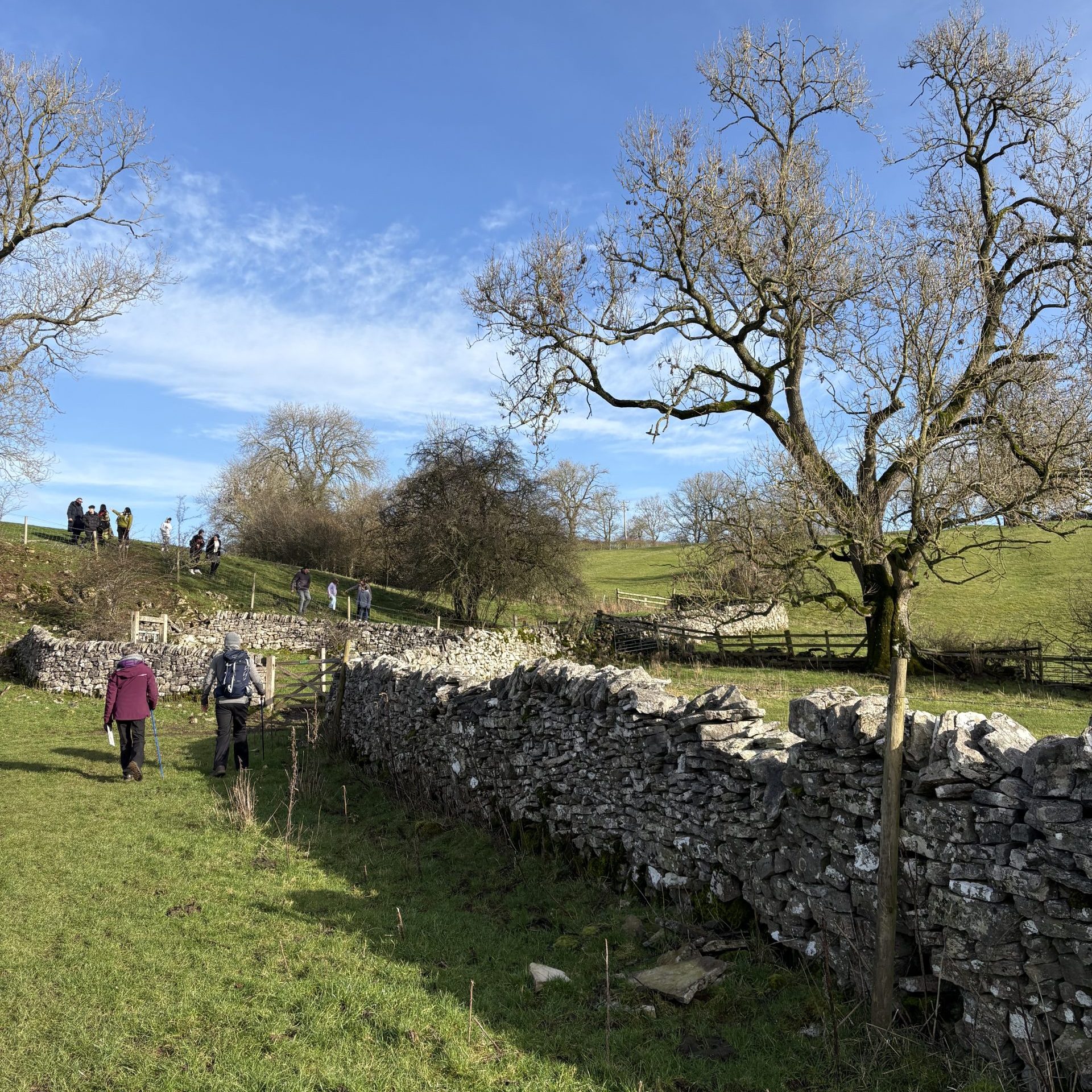
GesherEU’s Residential Weekend Away 2026 – The Biggest to Date The 2026 Gesher annual residential once again brought members and their families together for a wintry weekend of fun, community and shared experiences in the Peak District. With over 50 people attending, it was the largest residential we’ve held to date. Our members stayed in an large country house Airbnb, just a short walk away from a reservoir, the peaks and a hiking trail. It was an opportunity to relax, explore the great British outdoors, and share time with friends old and new. The weekend’s activities included a long, “very cold, muddy, wet and windy” hike on Saturday morning, which tested everyone’s endurance (as well as the impermeability of their boots), and an evening talent show where the children showed off their skills. One member, Odele, celebrated her birthday during the weekend. This year’s resident chef was once again longtime member and now trustee, Motti, who dished up tasty meals including his trademark Shakshuka for breakfast, and stuffed peppers for dinner. The annual residential weekend is a particularly important event for members’ children, helping them to adjust to life outside the community. One child reported,“I get to meet new people from different communities and backgrounds,” while another said, “I enjoyed the company of other children. I like that I have this private part of my life that people back in my community don’t need to know about and it’s my space.” This benefits their parents too. Malky, who brought her daughter along said: “I love that my daughter can come on these weekends and connect to like-minded kids and people that she can get on with.” Another mother told us: “It’s amazing how my child is able to socialise with all ages, and seeing him carefree and having company is my highlight.” Feedback from the weekend was overwhelmingly positive, with several members calling it “the highlight of our year.” Racheli said: “This is my first time experiencing something like this and at first I was a little nervous but after it I can confidently say that I enjoyed the nature hike, climbing up to the peak of the mountain and pushing myself out my comfort zone. I felt very comfortable with everyone, and everyone was very accepting and friendly.” For Miri, the weekend was “all about acceptance and having fun! And feeling supper comfortable whilst doing so I didn’t feel judged.” As for Zissy, “The Gesher weekends are a perfect blend of nostalgia and making new memories.True highlights of my year with lasting friendships and a special space to connect, heal, and grow together.”
Roundup of GesherEU’s Social Events 2025
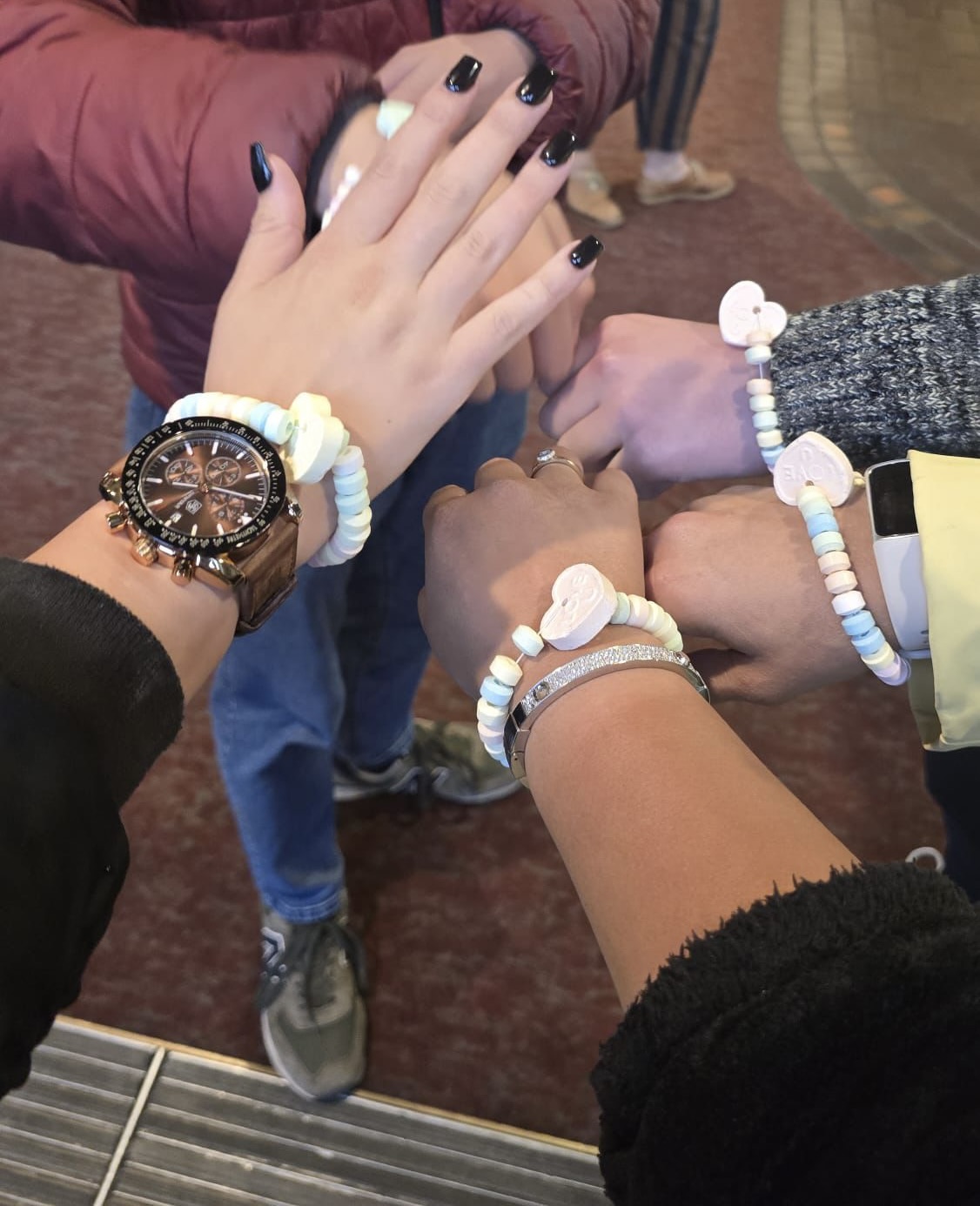
Roundup of GesherEU’s Social Events 2025 From Kurdish dancing to celebrating Pride and heckling a pantomime dame, the past year at GesherEU has been a very busy and interesting one. We’ve delivered 33 events, attracting 322 participants, which greatly exceeded our expectations. Events have included theatre trips and festival meals, pub socials, Friday night dinners, two residential weekends, nature walks, and creative meet-ups. There were also several novel experiences. We went to our first West End show (Hadestown), our first pantomime at JW3, hosted our first Christmas Dinner and enjoyed our first Pride picnic – as well as that aforementioned Kurdish dancing workshop. This year, we’ve also created a new Book Club and a wellbeing group, and members continue to benefit from our online parenting workshops. As one member commented, “Gesher events were the first time I ever went to a theatre — now I feel part of the world.” Our events aren’t just about having fun or learning new skills. For our members, just being able to – for example – sit around a relaxed Seder table with friends and without obligations or rules is a transformative experience. Many of them have never been to a pub before, or ordered a drink, let alone made smalltalk with the opposite sex. Our events help them to increase their cultural understanding, learn about the secular world and to integrate within it. They also help build confidence. For our members, GesherEU provides an alternative family. One member said: “I always feel right at home at a Gesher event. There’s no need to explain or justify. I can just be.” Another said: “Every time I come to an event I instantly feel very welcomed and loved — especially when I feel the lack of family and community.” A third commented on how stimulating GesherEU’s events can be: “Discussions with Gesher members have caused me to reflect on the attitudes around race and ‘othering’ that I absorbed growing up.”

Book Yourself a Place at GesherEU’s New Reading Club
Book Yourself a Place at GesherEU’s New Reading Club Put down your phone, close your laptop and turn off all your notifications. It’s time to bury your nose in a book instead. GesherEU has launched an exciting new club for our members: a book group, designed to stimulate minds and create lively discussion. The group, which currently has 14 members, held its first meeting online on the evening of 30th October, with sessions set to take place every six weeks via Zoom. Each meeting runs for 75 minutes. Rather than relying on a set reading list, GesherEU’s Book Club is entirely shaped by you. Members suggest titles, with the next book chosen democratically through a poll. The range of recommendations so far has been varied, spanning fiction and non-fiction, the classics and more contemporary works, Jewish and non-Jewish themes – reflecting the diverse interests of the group. Club coordinator, Mor Gartner said: “Questions are sent out in advance to guide the discussion, and we make sure everyone has a chance to share their thoughts and insights.” For the current cycle, members selected Love’s Executioner by psychotherapist Irvin D. Yalom. The book is a collection of true therapy stories showing the very human side of both therapist and client. Other suggestions included: I Who Have Never Known Men by Jacqueline Harpman; The Lion Women of Tehran- Marjan Kamali; Stone Butch Blues – Leslie Feinberg; 1984, the classic dystopia by George Orwell. While most meetings will take place online, GesherEU is planning two in-person gatherings – one mid-series and another at the end – to give members the chance to connect face-to-face. It turns out that GesherEU members are avid readers. Mor said: “We have some pretty advanced readers in the group – one person even finishes a book a day!” For others, the club offers the motivation to pick up a book again after life’s distractions have pulled them away. One member, Chaim, confessed that he used to read “two books a week” before discovering movies and other media. “I haven’t been able to get back into reading since,” he said. “I am really hoping going this club will pull me back to it.” The next meeting is scheduled for Wednesday, 10 December, when members will come together to discuss Love’s Executioner and select a new title.
Sex, Love and Relationships in the Charedi World and Beyond
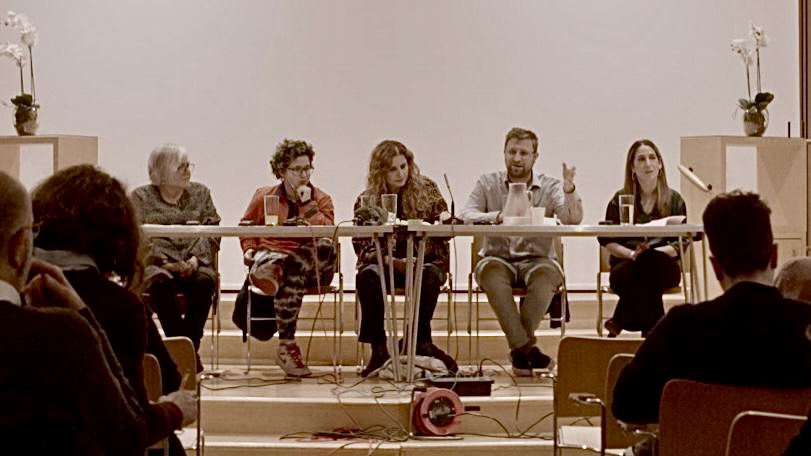
Sex, Love and Relationships in the Charedi World and Beyond https://www.youtube.com/watch?v=cG9HkhcwdmM GesherEU’s first ever panel discussion event took place at Alyth Gardens on the evening of Thursday 24th October. Former members of the Charedi community joined a psychosexual therapist to discuss sex and relationships, confront taboos, prove conclusively that the ‘hole in the sheet’ myth is untrue, and offer practical advice. Over 70 attendees were joined by the Mayor of Barnet, Rabbi and Councillor Danny Rich, for an evening of thought-provoking discussion, music (rising star and GesherEU member, Pini Brown, performed), and socialising. The panel featured Emily Green, GesherEU founder; Jean Miller, a psychosexual and relationship therapist; Izzy Posen, a Yiddish scholar and cultural advocate; and Ester Nitrate, who identifies as queer. Where there’s no consent it’s rape. And everybody is complicit “In the Charedi community, there was no sex education and no concept of consent,” said Green. “When it came to the wedding night, obviously I didn’t know the person I was going to marry. We had met three times – that’s it – and I was nervous and physically shaking. I couldn’t enjoy the wedding. I wasn’t focused. I remember feeling when my parents left, I just want to go home with them or with anyone, just not to go home and be alone… and I don’t know what was going to happen.” She explained she now finds it hard to go to Charedi weddings because she feels a sense of injustice. “I didn’t know the word then, and it’s a very loaded word, but where there’s no consent, it’s rape. And everybody is complicit.” Miller, who has worked extensively with Jewish clients, described the emotional scars this silence can leave. She said common sexual difficulties experienced within the community include painful sex because of vaginismus or dyspareunia in women, or rapid ejaculation in men. These can be overcome with sex therapy. “Sex therapy focuses on pleasure,” she explained. “It encourages clients to consider the difference between sexual pleasure and sensual pleasure, rather than sex as a duty or performance. It encourages people to say no to anything they don’t want.” I was lucky – I left before getting married Posen shared his own story of growing up in a world where matchmaking begins at around 18 and marriages are often arranged after a single meeting. “By the time you meet the girl, it’s more or less a done deal,” he stated. “I was lucky — I left before getting married. Many don’t, and it’s much harder when children are involved.” He also discussed the difficulties facing people who’ve left the community when they begin dating in the secular world. “I had my fair share of awkward experiences,” he recalled. “I remember one time when I was living in a shared accommodation with other students, and I went on a date with a housemate of mine. Because I was new to this, I assumed after the date that we were girlfriend and boyfriend, and I asked her to hold her hand. It was very awkward, and I had to continue living with that girl for a whole year.” He added: “But clearly, I’ve learned something along the way. In less than two months time, I’ll be marrying my brilliant and wonderful fiancée. So this is why I thought I’d share some tips. My main tip would be, you have to put yourself out there. You have to go to singles events, go to dating events, go on dates, be in the awkwardness. It’s going to be awkward, and you will fail. But you can’t learn unless you try and fail.” You don’t marry a man because you are attracted to him For Nitrate, who left the Charedi community aged just 16, learning about sex meant reading the dictionary. “On the page of the letter S, I got to the last word, and it said, ‘sexual intercourse’. Now, those were new words for me, so I read the definition – ‘when a man puts his penis into a woman’s vagina.’ I was confused. I was like, why would they do that? In the evening, when I was eating dinner, and my mum was serving me some chicken soup, I said, ‘Mummy, have you ever had sexual intercourse?’ She just dropped the ladle.” Nitrate described the process of coming out as LGBTQ+ – she is asexual. “I was really excited. I was so, it felt so good to have a name for what I was feeling, to be able to express what I wanted to express. When I tried to come out to the adults in my life, I thought they would be really happy for me. But their reaction was, there is no such thing {as asexual}. You don’t marry a man or have a relationship with a man because you are attracted to him. You just do it because that’s what Hashem or God said you should do.” There were several questions from the audience, ranging from the value of sex education and whether it should be segregated to if casual hookups were a good idea. As for that “hole in the sheet” myth – the claim that ultra-Orthodox couples have sex through a sheet: “It’s not true,” said Posen. “That comes from people seeing tzitzit — prayer garments — on washing lines. But there are traditions about modesty during intimacy, like remaining partially covered.”
Partying Like It’s 400 BCE
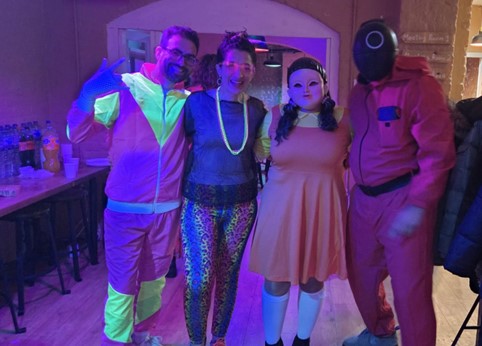
Partying Like It’s 400 BCE If you’d been wandering around East London on March 14th, you might have thought you’d fallen down a rabbit hole. Characters from Alice in Wonderland mingled with men in tutus, and menacing masked guards from Squid Game chatted to couples clad in neon 80s-style Lycra. In fact, you’d have found yourself at GesherEU’s annual Purim extravaganza – the biggest and best yet – where around 25 members got together to enjoy a fancy-dress party with music, dancing, drinks and a finger-food buffet. Historically, GesherEU’s Purim party always took place at founder Emily’s house. But the membership has now outgrown her living room and, this year, the charity wanted a larger, more atmospheric celebration. The chosen venue was a New York-style loft space in Shoreditch. Organiser Moishy Wajnsztok put together a playlist of dance tracks, with a few Purim tunes sprinkled in to mark the Jewish celebration. He and his girlfriend, who is Kurdish, even attempted a traditional Kurdish dance. Yehuda, a member who attended, said: “The party was lovely and a great chance to catch up with friends, make new ones, dance and experience Purim in my own way.” Another commented, anonymously: “The party was amazing. It felt really nice that you could let loose and enjoy celebrating Purim with people who are in the same boat as you.”
GesherEU’s Residential Weekend Away 2025
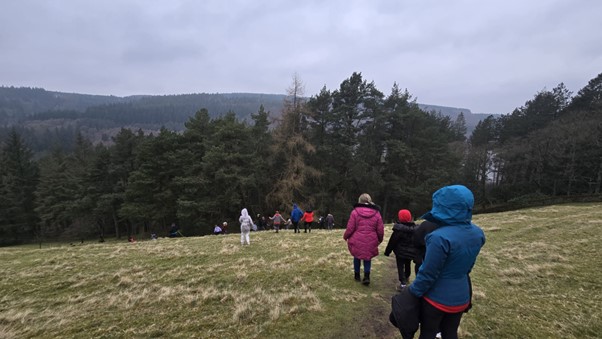
GesherEU’s Residential Weekend Away 2025 GesherEU’s annual residential weekend is now the highlight of our calendar – a chance for members and their families to get together, have fun, share their experiences, and build community. This year’s weekend away was the most successful – and largest – ever. It took place between 14th and 17th February in its usual venue, a converted old pub in the Peak District. But the event has now become so popular – with 50 adults and children attending – that we had to hire two extra houses to fit everybody in. “We have more and more people wanting to come every year, as the event’s popularity spreads by word of mouth,” says GesherEU event organiser, Moishy Wajnsztok. “It’s such a good way for people to come together and make new friends, and it’s also an opportunity for people who might not otherwise be able to afford a holiday to get away.” Shakshuka and Tutus Even the rainy and cold weather couldn’t dampen people’s spirits. Some members donned tutus and Hawaiian garlands for a fancy dress dance party. Other highlights included a talent show, countryside hikes, karaoke and table football. Member and trustee Motti Kalikstein was once again tasked with cooking for everyone, serving up an array of dishes from shakshuka to roast chicken. “The food was delicious,” says Moishy, “but a few fussy kids weren’t impressed. They would only eat plain pasta, so we had to send someone out for supplies. I’ve made a note to make sure we have plenty of pasta in stock for next year.” Anonymous feedback from the weekend was overwhelmingly positive. One member said, “You have created both an amazing and strong community and the most amazingly organised, fun packed, welcoming weekend.” A second wrote: “To all of you, thank you for your wonderful company. It was uplifting and filled with positive energy contributed to by all.” And another commented: “Thank you so much for making me and the children feel so welcomed. We had a really lovely time! Thank you as well to everyone who organised and for the amazing food. You guys are incredible.” Moishy is already planning next year’s event and looking for a new – and larger – venue.

Yom Kippur: A Time for Reflection and Renewal
Yom Kippur: A Time for Reflection and Renewal Yom Kippur is on Saturday. I kind of forgot about it. It was not something my brain was spending energy on. I was reminded by my brother who called, asking to borrow a book. He’s not usually a reader and didn’t explain why. It took me some time to figure out that he might be very bored all day. Yom Kippur is also the first time I “broke” anything big. I slept in and went to shul to meet a friend. He lived alone, and suggested going back to his. I had brought my phone with me. We convinced ourselves that we were “allowed” to use our phones (and possibly smoke too). All it took was a short conversation between us involving some mental gymnastics, and our consciences were clear. I went back to yeshiva that winter and began to think less about breaking Shabbos. That was 12 years ago, and it’s been a long journey. Thinking “hey, you shouldn’t break Shabbos” came in ebbs and flows over the years. I fluctuated back and forth on the religious spectrum, never quite sure where to settle. I haven’t felt bad about treating Saturdays – and Yom Kippur in this case – like an extra weekday for quite a while now. Now, it’s a day for me to choose how to make the most of. Whether I use it for downtime, running errands, or spending time with loved ones, I see it as another day to make the most of. I’m going to the Taskmaster Live Experience on Saturday. I love the show, so I overpaid for tickets on launch day and have been looking forward to it since. I booked the tickets as fast as possible, picking a random Saturday that looked empty in my calendar without giving it a second thought. Turns out that Yom Kippur falls on this random Saturday too, so I must remember to stop by my parents on Friday to wish them an easy fast and that they may be sealed in the Book of Life. Written and submitted by GesherEU member, Sheya.

Pini on the Roof
Pini on the Roof GesherEU’s very own Pini Brown is the star of a brand new documentary short film, which will be shown at the UK Jewish Film Festival this November. ‘Pini on the Roof’ follows Yiddish Blues singer Pini, who left the Hasidic community in Stamford Hill five years ago and is now a mini-celebrity in the hipster neighbourhood next door. In this humorous and moving day-in-the-life portrait, he navigates belonging in the secular world while not rejecting where he came from. The film was a winner of the Dangoor UK Jewish Film Short Docs Fund this year, a project which aims to document modern-day British Jewish life in a series of creative and original four-minute documentaries. This premiered at the Finchley Phoenix in November 2024, with screenings in Manchester, Birmingham, Bath, Brighton, Glasgow, Leeds, Liverpool, and Oxford.

Gesher EU’s Summer 2024 Reading List
Gesher EU’s Summer 2024 Reading List We asked GesherEU members to recommend books that had resonated with them, whether novels or non-fiction. Here are the top ten: All Who Go Do Not Return by Shulem Dean The personal story of a religious, divorced Jewish husband and father who chooses to live a secular life in New York City. A GesherEU member says: “I found it to be a good reflection of people leaving the community.” Big Bang by Simon Singh A fascinating exploration of the most important scientific discovery of all time – the Big Bang theory. AGesherEU member says: “The story of how humans explained the universe throughout history, and how our understanding evolved over the centuries.” Unorthodox: The Scandalous Rejection of My Hasidic Roots by Deborah Feldman A memoir of leaving the ultra-orthodox community in New York, now also a major Netflix drama series. Becoming Eve by Abby Chava Stein The powerful coming-of-age story of an ultra-Orthodox child who was born to become a rabbinic leader and instead became a woman. Kissing girls on Shabbat by Sara Glass A memoir about one young woman’s desperate attempt to protect her children and family while also embracing her queer identity in a controlling Hasidic community. The Chosen by Chaim Potok The classic story of a friendship between two Jewish boys from different backgrounds. A GesherEU member says: “Potok is an incredible writer.” Disobedience by Naomi Alderman A novel about a woman who returns to the ultra-orthodox community In London where she grows up and confronts her past. A GesherEU member says: “A great read but I could tell the author didn’t grow up in the Charedi community.” Sapiens: A Brief History of Humankind by Yuval Noah Harari One of the world’s preeminent historians and thinkers, Yuval Noah Harari challenges everything we know about being human. A GesherEU member says: “This puts humankind and religion into perspective.” Foreskin’s Lament by Shalom Auslander A brutally funny coming-of-age memoir about a man growing up in – and then breaking free from – the ultra-orthodox community. A GesherEU member says: “So funny and brilliantly written. The way he showed the crazy logic behind some of the rules we grew up with! Totally made me an atheist!”

